Compare the whole frame
A frame is a coordinated assembly of profiles, joints, seals, glazing supports, finishes and hardware. Material influences the visual character and maintenance approach, but design, manufacturing, installation and exposure all matter. A material name alone cannot establish thermal performance, durability or suitability.
Start with the building and its openings. Record visible frame width, depth, colour, reveal position and the amount of frame visible inside and outside. Then compare upkeep, repair options, finish expectations and local requirements. Ask for project-specific documentation before making performance claims or committing to a system.
Timber
Timber brings a natural surface and can suit traditional façades, contemporary interiors and many renovation settings. It can be painted, stained or left with a chosen finish where the system and exposure allow. Timber frames can be repaired in some circumstances, which may help retain original joinery or extend service life when damage is localised.
Maintenance depends on species, coating, construction, orientation and weather exposure. Inspect vulnerable edges, joints and finishes as part of a regular care plan. Direct rain and strong sun can increase upkeep. Repainting or refinishing requires access and preparation; a neglected coating can make later repair more involved. Ask how the proposed frame is protected and what maintenance guidance applies to its exact construction.
Aluminium
Aluminium is used in contemporary systems where a crisp metal finish and relatively narrow-looking profiles are desired. Coated or otherwise finished surfaces offer a range of visual choices, subject to the available system and specification. Its visual precision can suit large openings and modern façade compositions.
Check the entire frame profile, including interior cover details, corners, thresholds and junctions with the wall. Durability depends on design, finish, environment and care; avoid treating the material as maintenance-free. Confirm how scratches or damaged finishes can be addressed and whether the system suits the project exposure. Thermal characteristics depend on the complete frame construction and should be supported by relevant project documentation.
Timber-aluminium
Timber-aluminium systems typically place timber on the interior and a protective metal layer on the exterior. The arrangement combines an interior timber finish with an outer surface intended to shield the timber from weather. It can be considered when an interior natural material and a different exterior appearance are both priorities.
Inspect how the external layer is fixed, drained and ventilated according to the system design. The exterior metal layer does not remove the need to maintain interior finishes, seals, hardware or accessible junctions. The assembly can have a different visual depth from a single-material frame. Review the profiles on both sides and verify how colour, corner joints and replacement parts are handled.
Steel
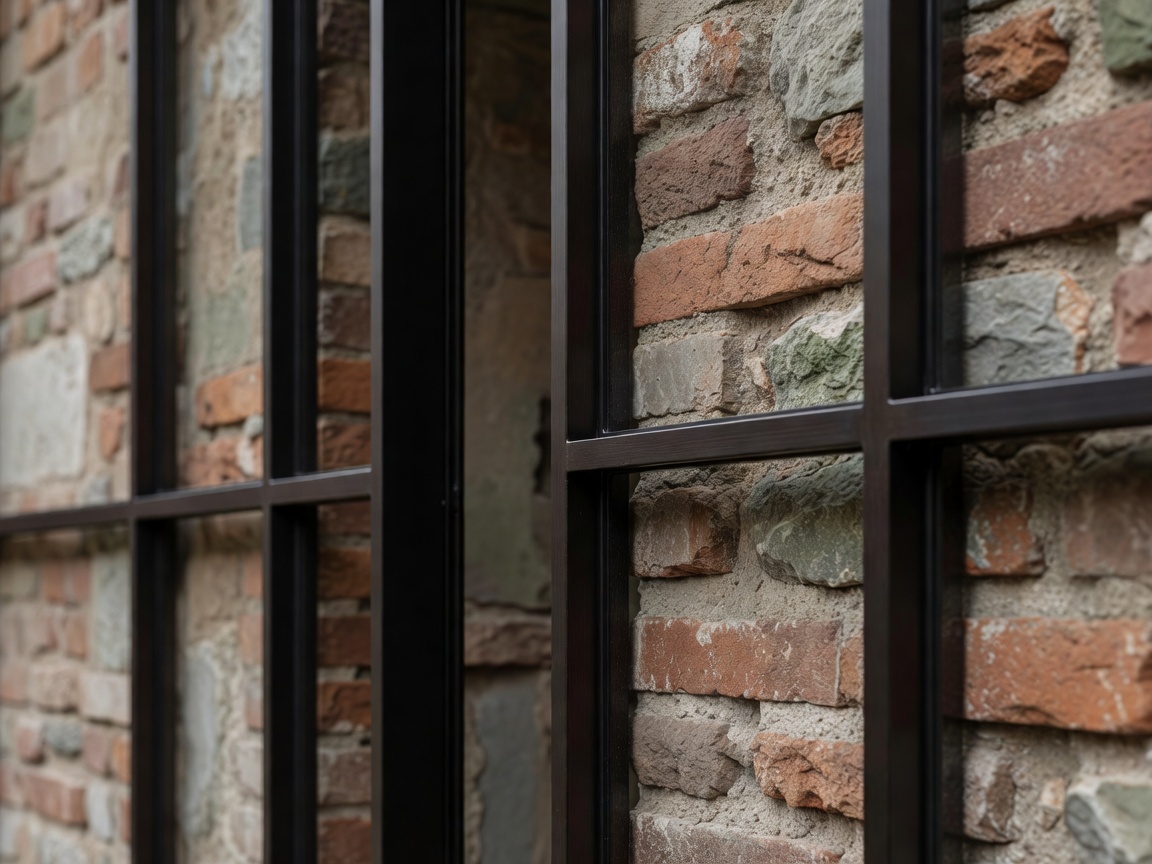
Steel can support slender visual profiles and is found in heritage, industrial and contemporary architectural contexts. Its appearance can make a fine division pattern possible, although actual dimensions and capabilities depend on the specific frame and engineering requirements. It can work as a deliberate contrast against masonry or as part of a carefully matched historic composition.
Steel needs a suitable protective finish and attention to the surrounding environment. Inspect coating condition and ask how corrosion risk is managed for the intended exposure. Thermal performance is a property of the whole assembly, not a guarantee attached to the metal. Heritage replacement may require specialist detailing and approval. Consider weight, hardware, repair access and exact profile depth as part of the selection.
Composite systems
Composite is a broad category for frames combining two or more materials or material layers. The intention may be to combine different surface, structural or environmental properties. There is no single composite construction or standard maintenance profile. Request a clear description of the layers, their roles and how they connect.
Ask what can be repaired separately, what finishes are available, and how components are replaced. Clarify which faces are exposed to weather and how joints are managed. Compare credible documentation for the full assembly rather than relying on a broad marketing term. The system should be assessed against the building's context, desired sightlines and project requirements.
Frame depth, finishes and thermal considerations
Frame depth affects the interior reveal, exterior shadow line and relationship to wall insulation. A deeper frame may sit inside, outside or near the centre of the wall; the right position depends on the wall build-up and design. Do not prescribe installation position without project-specific review.
Finishes influence colour, reflectance and maintenance. Compare samples in the actual light and next to façade materials. Thermal considerations include glazing, frame, seals and installation junctions. Ask a qualified designer or energy professional to review the complete specification. Do not infer a rating, certification or energy outcome from material category alone.
Good for / What to know
Good for: narrowing material choices by architectural character, repair approach, interior finish and exposure conditions.
What to know: no family is universally superior. Availability, exact construction, finish quality and maintenance vary. Manufacturer-specific performance should be verified from current project documentation; this guide does not supply ratings or product claims.
Selection criteria and specification notes
Compare visible profile width, frame depth, surface finish, repairability, maintenance access, exposure, glazing compatibility and the building's historic character. Include interior and exterior views in the review. Request exact system drawings, finish samples and care instructions. Check local conservation and building requirements. Do not select by colour swatch alone.